AI is now being used in numerous business operations. It gets incorporated in meetings, planning sessions, and sales pitches. Despite all these efforts, there are still many companies who find themselves unable to leverage small business AI agents for their daily operations.
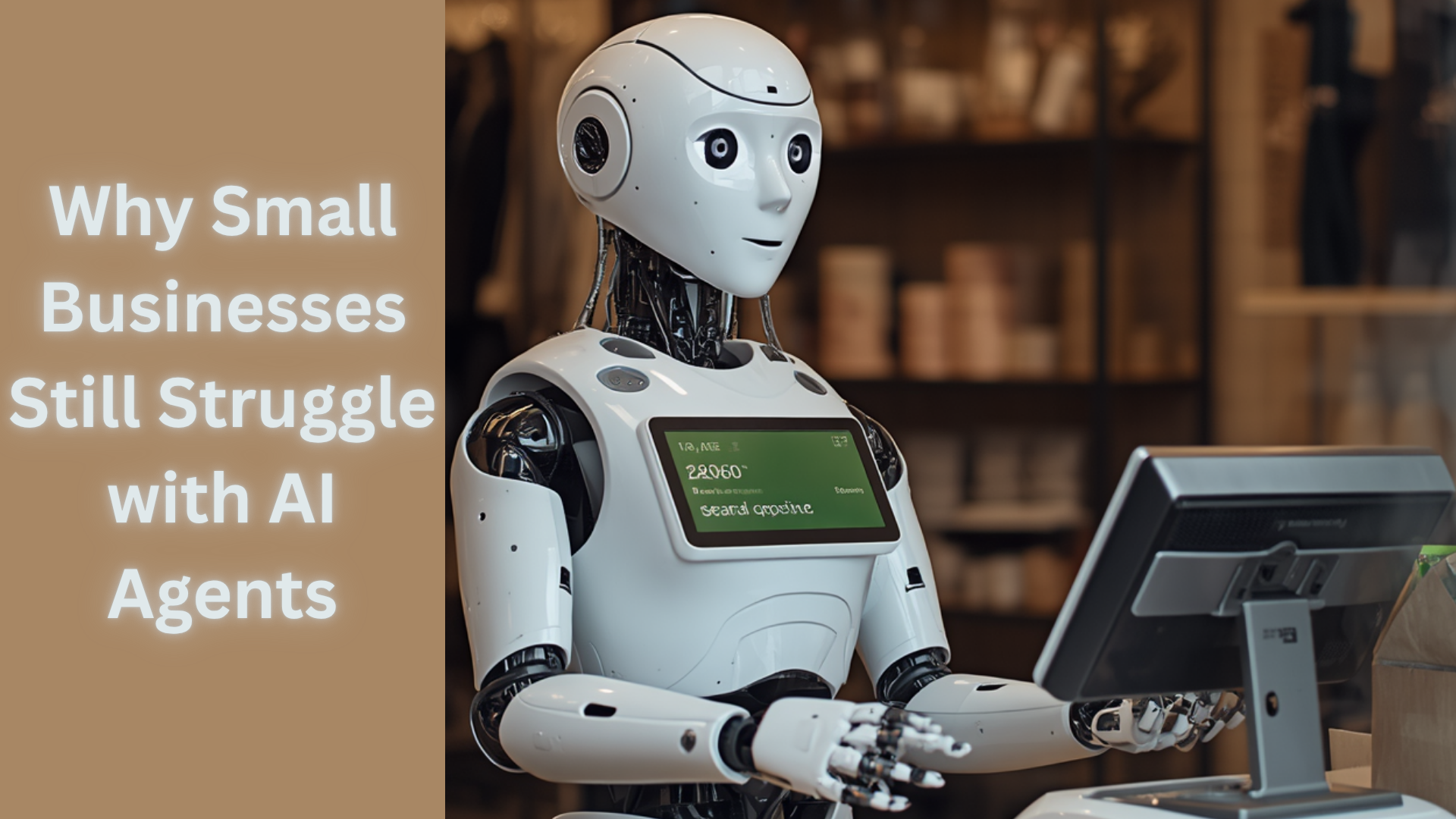
In many instances, small business AI agents remain in the testing phase in many organizations. Usually, a team experiments with one of the tools and then starts a short pilot. However, after that, the progress slows down. This is because although the technology is viable, it doesn’t always get adopted. One of the challenges businesses have is to transform experiments into practice so that the results are experienced instead of remaining out of reach.
Uncertainty in Small Business AI Agents Holds Progress Back
The uncertainty is one of the reasons. Most business owners and managers worry about security, privacy, and compliance. They ask themselves various questions such as: “What data does AI have?” and “How are decisions made?” The lack of answers leads to mistrust. Another problem that arises in using small business AI agents is that owners do not see a strong business case. Oftentimes, AI feels interesting, but not essential. It seems to become more of a talking point rather than a practical tool.
Additionally, confidence in the technology is also a factor. This is because although there seems to be a lot of employees who are interested, most are unsure of AI. They are afraid of mistakes, wrong answers, or misuse of small business AI agents. As such, without proper guidance, people either avoid AI or use it inconsistently that leads to more risks and diminishes values.
Small Business AI Agents Works Best with People
Unfortunately, even with the many potential benefits of deploying small business AI agents, companies are not taking advantage of the tools. Not only would your business be able to provide customer answers more quickly, your small business AI agents can also detect problems sooner. It can also help with making analysis of data easier. Basically, daily routines and business processes are completed in a shorter period of time with the right tools and a reliable provider.
Moreover, small business AI agents can also enhance monitoring capabilities in technical environments and boost security. It means they can also highlight issues before they cause outages. They are also able to suggest very practical improvement that has a very tangible impact in the long term.
A Human-First Approach Wins
So, when businesses are making strides, they tend to do so consistently. Part of this is to develop clear rules for the use of AI. This should also define its limits and strengths. Furthermore, human judgment remains central especially since training is also an important part. As business owners and managers, staff should be provided with confidence, direction, and reassurance that AI is a tool to lighten everyone’s burden. It must be emphasized that AI works best as support, not a replacement. Most AI initiatives don’t fail due to technology’s weaknesses. They fail because people are unprepared to use it well.